Guide · one of two
Tree work and the law: TPOs, conservation areas and the things people find out too late
Most of the awkward moments in this trade happen before anyone climbs anything. A tree turns out to be protected, or the house is in a conservation area, or there is a nest in the hedge. None of it is difficult once you know — but it is genuinely expensive to get wrong. Here is the plain-English version for gardens around Marlow, Henley and High Wycombe.
Tree Preservation Orders
Written consent required
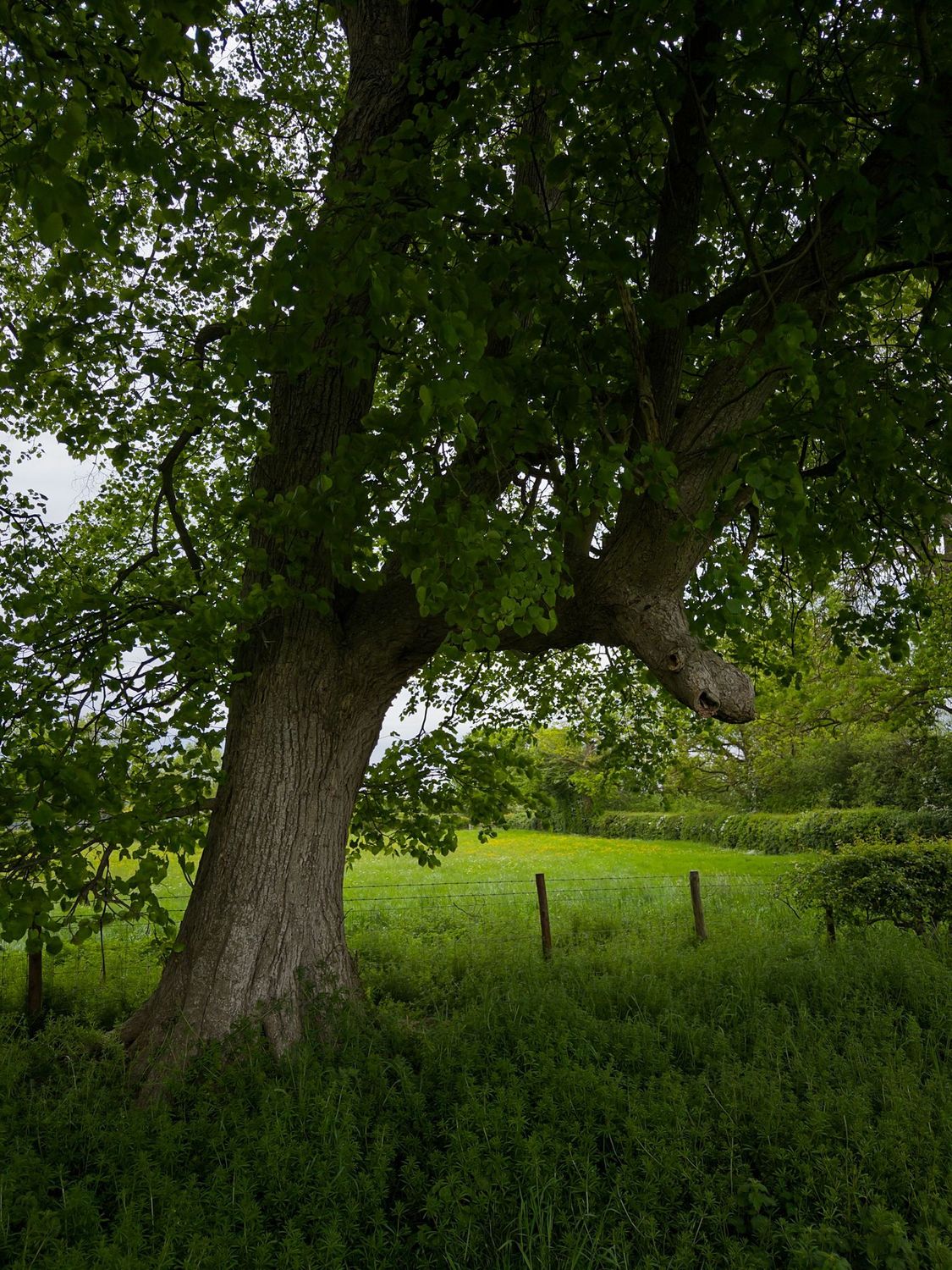
A Tree Preservation Order is made by your local planning authority under the Town and Country Planning Act 1990. Where one applies you must have the council's written consent before you cut down, top, lop, uproot, wilfully damage or wilfully destroy the tree — and that includes a modest prune. The application itself is free and the council normally has eight weeks to decide. Orders can cover a single tree, a group, or every tree in a defined area, so the fact that your neighbour's tree is unprotected tells you nothing about yours.
Conservation areas
Six weeks' notice
If the property sits in a conservation area, trees are protected even without a TPO. You have to give the council six weeks' written notice — a section 211 notice — before starting work on any tree with a stem thicker than 75mm measured at 1.5m above the ground. The council uses that window to decide whether to make a Tree Preservation Order. Marlow, Henley and much of High Wycombe have conservation areas, and plenty of homeowners have no idea they are in one until a letter arrives.
Dead, dying and dangerous
Exemptions, with conditions
There are exemptions for dead trees and for work urgently needed to remove an immediate risk of serious harm, but they are narrower than people hope. You are generally expected to give the council five working days' notice beforehand where you can, or to notify as soon as practicable afterwards, and to keep evidence — photographs before the work, not after. 'It looked dodgy' is not a defence on its own. If in doubt, we would rather make the tree safe, record it and talk to the council than take the tree out and argue later.
What it costs to get wrong
Unlimited fines
Cutting down or destroying a protected tree without consent is a criminal offence and carries an unlimited fine in the magistrates' court; lesser breaches carry fines up to level 4. The liability sits with the tree owner as well as the contractor, and councils in this part of Buckinghamshire do prosecute. It is the single best reason to have someone check before the first cut rather than after.
Nesting birds
Roughly March to August
Under the Wildlife and Countryside Act 1981 it is an offence to intentionally damage or destroy the nest of a wild bird while it is in use or being built. In practice that means hedge cutting and heavy crown work are planned around the nesting season — broadly March to August, though it varies with the weather. We check before cutting in that window, and if there is an active nest the job waits. It is not a technicality; it is the reason a hedge sometimes has to be booked for September.
Bats and other protected species
Stop and take advice
Bats and their roosts are protected all year round, whether or not a bat is present at the time. Old trees with hollows, splits, woodpecker holes and lifting bark are exactly where roosts occur, and this is bat country. If there are signs of a roost the work stops and advice is taken before anything else happens — that is the law, and it applies to the tree owner as much as to the climber.
Your neighbour's branches
Common law abatement
You are entitled to cut back branches and roots that cross your boundary, but only as far as the boundary line, and you cannot enter your neighbour's garden to do it without permission. The cut material technically still belongs to them, so the polite course is to offer it back. Two important exceptions: none of this overrides a Tree Preservation Order or conservation-area protection, and you cannot prune so hard that you kill or destabilise the tree — that becomes a claim against you.
High hedges
Anti-social Behaviour Act 2003
There is a separate route for evergreen or semi-evergreen hedges over two metres that are blocking a neighbour's light. Part 8 of the Anti-social Behaviour Act 2003 lets the council intervene, but only after you have genuinely tried to settle it between yourselves, and most councils charge a fee to consider a complaint. In our experience a sensible reduction, agreed between neighbours and done well, solves it far more cheaply than the formal process does.
Planning conditions and replanting
Check the paperwork
Newer properties often carry planning conditions that protect specific trees or require replacement planting, quite separately from any TPO. If consent to remove a protected tree is granted, the council can attach a condition requiring you to plant a replacement. Worth knowing before you plan the patio, and a good reason to talk about what goes back in at the same time as what comes out.
Who you apply to
Three councils cover this patch.
Your address decides which tree officer you are dealing with, and they do not all take the same view of the same job. We will tell you which one applies to you at the quote.
Buckinghamshire Council
Marlow, Little Marlow, Bourne End, High Wycombe, Lane End, Cadmore End, Hurley area enquiries
Royal Borough of Windsor & Maidenhead
Cookham, Pinkneys Green and the Berkshire bank
South Oxfordshire District Council
Henley-on-Thames and the Oxfordshire side
This page is general guidance on the law in England, written to save you a nasty surprise — it is not legal advice, and your council's tree officer has the final word on your particular tree. What we can promise is that we will raise it at the quote rather than after the event: if your tree looks protected, or the address looks like a conservation area, you will hear it from us first. One customer's review mentions exactly that — the team helping engage with the council for a successful application to reduce the crown of a protected tree.
Next guide — when to pruneThink your tree might be protected?
Ring before you do anything. We will check what applies, explain what has to be submitted and work to whatever consent comes back.