Guide · two of two
When to prune: a year in the garden, tree by tree
Timing is most of the craft. The same cut that makes a tree stronger in January can cost you a season of flowers in April or let disease in come June. This is how we think about the gardening year for the kinds of trees that actually grow in Thames Valley gardens — useful whether you do it yourself or ring us.
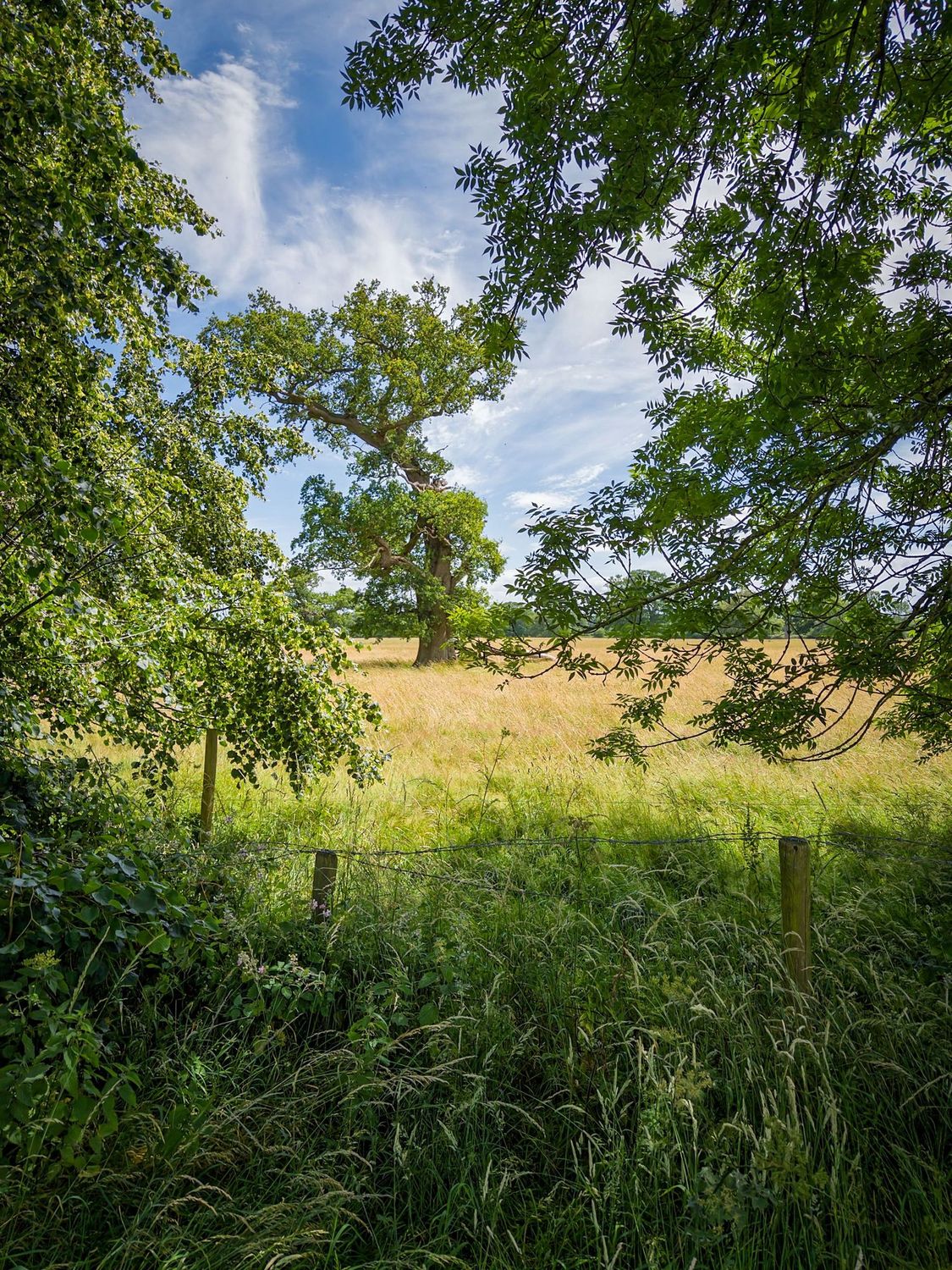
The gardening year
Four seasons, four jobs.
Winter
November – February
The main season for most broadleaved trees. With the leaves off you can see the structure, the wounds close cleanly and the tree is dormant, so nothing is wasted. This is when to reduce and reshape oak, beech, lime, hornbeam, ash and sycamore, when to prune apples and pears, and when heavy dismantling and hedge removal are least disruptive to wildlife. It is also the quietest time to get booked in.
Spring
March – May
Do less than you think. Birch, maple, walnut and hornbeam bleed sap heavily if cut now, and although it rarely kills the tree it looks alarming and does it no favours. Bird nesting season is under way, so hedge cutting and heavy crown work need checking first. Spring is for planting while the ground is warming, mulching, checking ties and stakes on young trees, and taking out obvious deadwood.
Summer
June – August
The season for plums, cherries and the rest of the Prunus family — pruned now rather than in winter, because silver leaf and bacterial canker are far less able to get in while the tree is growing strongly. Summer is also when you can see exactly how much light a crown is blocking, which makes it the honest moment to plan a reduction or a crown lift. Formal hedges get their main cut once nesting has finished, usually from late August.
Autumn
September – October
The best window of the year for hedge work — nesting is over, growth has stopped, and a hedge cut now holds its shape all winter. Storm season starts, so it is the sensible time to deal with deadwood and heavy overextended limbs before the first real gale rather than after it. Autumn is also prime tree planting time: the soil is still warm, the rain has returned, and roots get established months before the leaves appear.
Species by species
The ones people get wrong.
If you only remember one thing from this page, make it the second row: plums and cherries are pruned in summer, never in winter.
Apple & pear
Dormant season, December to February
Prune for an open, goblet-shaped crown with light into the middle. Neglected old trees are brought back over two or three winters — take half a tree off in one go and you get a thicket of water shoots instead of fruit.
Plum, cherry & damson
Summer, June to August
Never in winter. Prunus species are vulnerable to silver leaf and bacterial canker through cool, damp wounds; pruned in growth, they seal quickly.
Birch, maple & walnut
Late summer to early autumn
These bleed profusely if cut in late winter or spring. Waiting until growth has slowed avoids the sap running for weeks.
Oak
Winter, and never in spring
Dormant-season pruning also reduces the risk of spreading oak diseases, which are most active in the warmer months.
Magnolia
Midsummer, straight after flowering
Magnolias resent hard cutting and heal slowly, so shaping is done lightly and at the right moment — one of our reviewers describes exactly this job, a large magnolia given substantial pruning and shaping over a full day.
Beech & hornbeam hedges
Late summer, August
A single annual cut after nesting keeps the dead leaf cover through winter, which is half the point of a beech hedge.
Leylandii & conifer hedges
Late spring and late summer
Reduced in stages, and never cut back into old brown wood — conifers will not regrow from it. Height comes off first, faces second.
Deadwood, anywhere
Any time of year
Dead branches are dead. Removing them is about safety, not the plant's health, so it is done whenever the risk warrants it.
What shapes the timing
Six things we work through on site.
- 01What the tree is — species decides the season far more than convenience does.
- 02Whether it flowers or fruits, and on old wood or new.
- 03Whether the tree is protected by a Tree Preservation Order or sits in a conservation area, because consent takes weeks.
- 04Bird nesting season, roughly March to August, for anything that amounts to a hedge.
- 05What is underneath it — access for a chipper, and whether limbs can be dropped or have to be roped down.
- 06How much you actually want changed. Taking less, more often, is nearly always better for the tree than one hard cut every decade.
If you are not sure where your tree sits in all this, that is exactly what the free quote visit is for. Ring 01628 947199, tell us roughly what you have got, and we will tell you honestly whether it wants doing now, in three months, or not at all.
Other guide — tree work & the lawRather leave the timing to us?
Ring for a free quote and we will tell you honestly whether the tree wants doing now, in three months, or not at all.